Temp mail for social media allows users to protect their privacy, avoid spam, and create accounts without exposing personal inboxes. However, each platform treats disposable email differently — some allow it, while others actively block it.
To get started quickly, choose your platform:
[ TikTok ] [ Facebook ] [ Instagram ][ Discord ] [ Spotify ] [ Netflix ] [ WhatsApp ]
Or explore the full platform-by-platform breakdown below.
Signing up for a new social media account should take seconds. Yet using your real email often creates a long-term connection you never intended — one that leads to persistent marketing emails, cross-platform tracking, and a digital trail that’s hard to erase.
Temp mail for social media offers a simple alternative. Instead of linking every signup to your personal inbox, it allows you to create accounts, receive verification codes, and move on — without exposing your primary email address.
Whether you’re exploring TikTok trends, joining a Discord server, testing a new Instagram niche, or downloading assets from Canva, most platforms require email verification. That single step turns your inbox into an identifier — connecting your activity across services, ads, and data profiles over time.
This is why more users are turning to disposable email as a practical privacy layer. It helps you complete registrations quickly while reducing long-term exposure, giving you more control over how your digital identity is used.
✅ Use Temp Mail to:
- Sign up instantly without using your real inbox
- Avoid long-term spam and promotional emails
- Reduce cross-platform data tracking
- Test social platforms safely and anonymously
- Stay in control of your digital identity
Instead of committing your personal email to every new app, a temporary email lets you complete the registration process, receive the verification code, and move on — without leaving a permanent footprint.
Think of it this way:
Real Email = Data Trail
Temp Mail = Clean Exit
In this guide, you’ll learn how temp mail works for social media signups, when to use it, which platforms it’s most useful for, and how to protect your privacy while still enjoying everything modern social platforms offer.
Why People Use Temp Mail for Social Media
Many users today are concerned not only about inbox spam but about how a single email address can link their activity across multiple platforms, enabling cross-site tracking and detailed profiling. According to the latest available Pew Research Center data, 81% of U.S. adults remain very or somewhat concerned about how companies use the personal data they collect, with most feeling they have little to no control over it. More recent surveys reinforce this trend: a 2026 YouGov poll found 61% of Americans consider limiting access to their personal data very important, while broader global reports show over 80–90% of internet users express ongoing worries about online privacy and data tracking.
On the spam front, global email traffic continues to explode — with daily volumes projected at around 392.5 billion emails in 2026 — and spam still accounts for a significant share. Recent reports indicate 45–48% of all emails are classified as spam , where marketing emails and unsolicited promotions make up a large portion of unwanted messages. This persistent overload, combined with rising privacy fears, explains why more people are turning to temp mail for social media as a practical way to sign up anonymously, receive verification codes, and avoid long-term spam or data linkage.
One Email Can Connect Your Entire Online Identity
A primary email often becomes a persistent identifier:
- Platforms can share tracking signals
- Advertisers and data brokers can correlate behavior across services
- Single identifiers enable detailed behavioral profiling
In short, the concern isn’t just spam — it’s that a single email can expose your activity across multiple platforms.
Social Media Signups Often Trigger Long-Term Data Exposure
Registering for a social platform is rarely a one-time interaction.
Once an email enters a platform ecosystem, it may be used for:
- Ongoing notifications and lifecycle messaging
- Advertising personalization signals
- Security alerts, integrations, and cross-service syncing
- Data retention long after the account becomes inactive
Meanwhile, email remains a dominant vector for malicious activity: phishing and spam campaigns continue to rely heavily on email distribution channels, reinforcing user caution about where their address is shared.
In other words:
Signing up is temporary.
The data relationship is not.
That mismatch between short-term intent (create an account, test a service, access content) and long-term exposure is exactly where temp mail for social media becomes a practical solution rather than just a convenience tool.
How Temp Mail Works for Social Media Signups
If you’ve never used a temporary email before, the process is designed to be simple, fast, and purpose-built for verification-based registrations. Unlike a traditional inbox, temp mail is created instantly and requires no personal information, making it ideal for short-term social media access.
From an SEO perspective, users searching “how to use temp mail for social media” are typically looking for a clear, actionable workflow. The steps below reflect the most common use case: completing account verification without exposing a personal email address.
Step-by-Step: Using Temp Mail for Social Media Registration
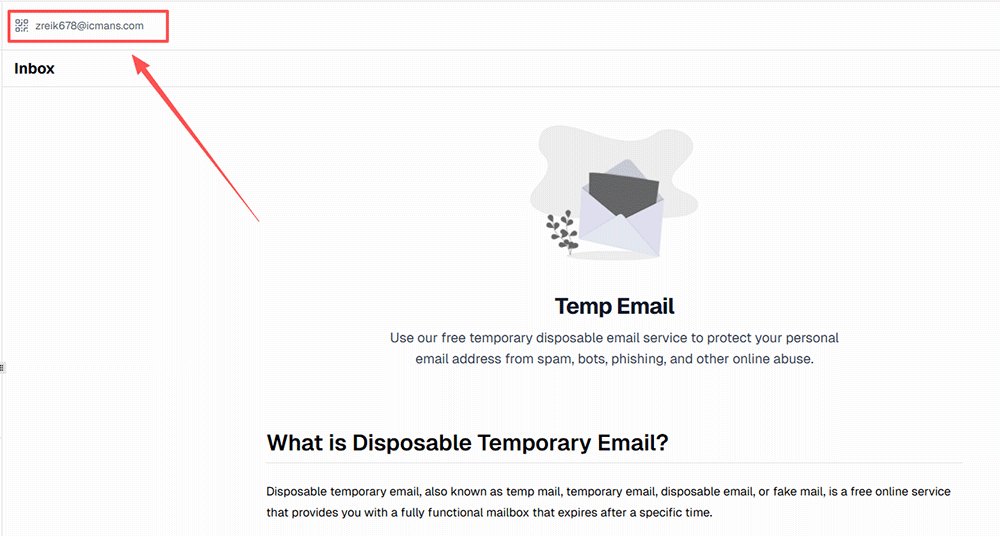
1️⃣ Generate a Disposable Email Instantly
Open a temp mail service, and an email address is automatically created for you—no signup, no password, and no personal data required.
This address functions like a normal inbox but is session-based and temporary.
2️⃣ Enter the Address During Social Media Signup
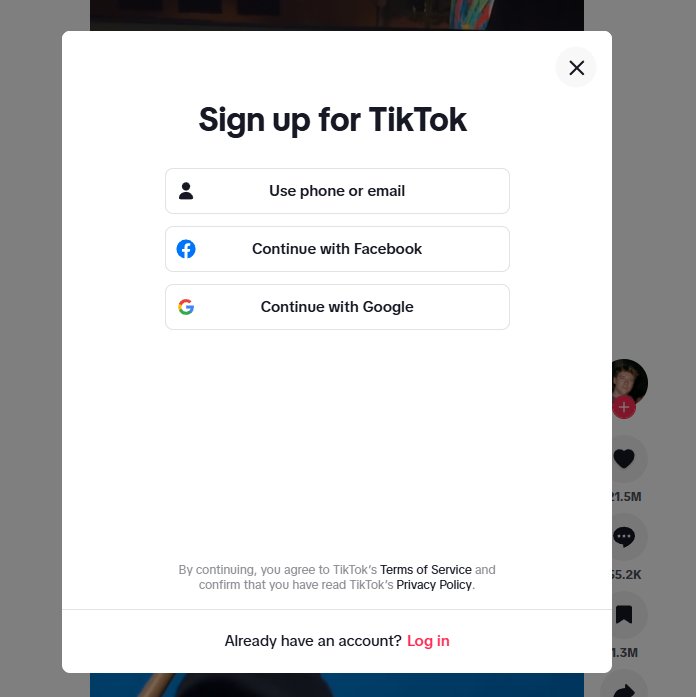
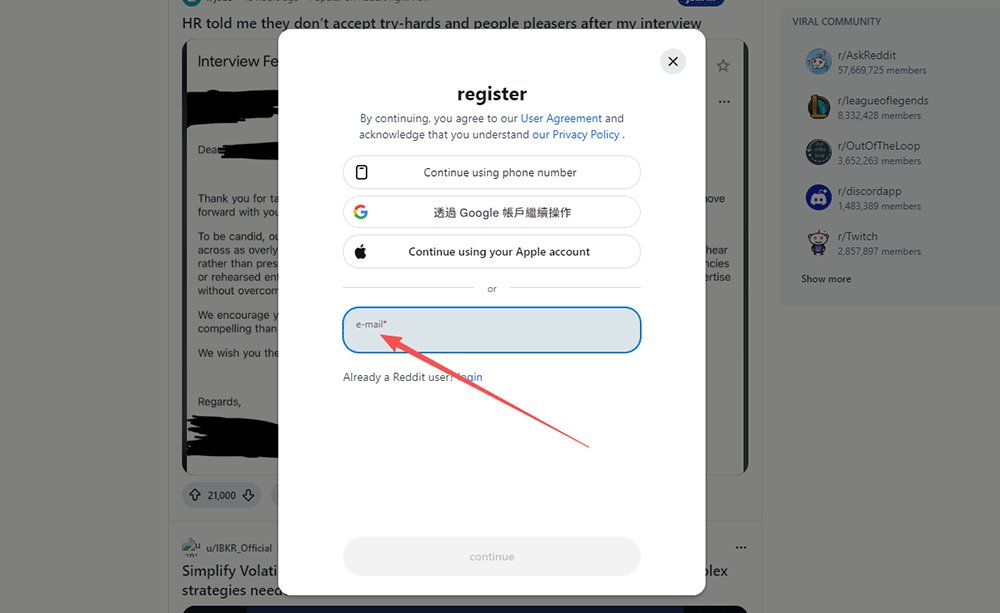
When registering on platforms like TikTok, Instagram, Discord, or Facebook, paste the generated email into the required field instead of your real one.
3️⃣ Receive the Verification Code (OTP or Confirmation Email)
The platform sends a verification message just as it would to a standard inbox.
The message appears in real time within the temporary mailbox, allowing you to retrieve the code immediately.
4️⃣ Activate Your Account
Enter the verification code or click the confirmation link to complete the signup process.
At this stage, the social media account is fully activated and usable.
5️⃣ Let the Inbox Expire Automatically
After a set period, the temporary inbox deletes itself along with any stored messages.
This automatic expiration helps ensure that the email is not reused as a long-term identifier.
Why This Workflow Matters for Privacy-Conscious Users
Traditional email registration creates an ongoing connection between your identity and the platform. Temp mail changes that dynamic by introducing a disposable verification layer—you can complete access requirements without establishing a permanent communication channel.
This approach is especially useful when:
- Testing a platform before committing to it
- Creating secondary or experimental accounts
- Accessing gated content or communities
- Avoiding lifecycle marketing emails after signup
When Should You Use Temp Mail for Social Media?
Not every social media signup needs to be tied to your primary email address. In many situations, users are exploring, testing, or accessing content temporarily rather than building a long-term presence.
This is where using temp mail for social media becomes a practical choice—allowing you to complete verification requirements without extending your personal digital footprint.
From an intent perspective, people searching for temporary email solutions are often trying to balance accessibility and privacy: they want to use a platform, but they don’t want the commitment, follow-up emails, or long-term identity linkage that comes with traditional registration.
Common Scenarios Where Temp Mail Makes Sense
| Scenario | Why Temp Mail Helps |
|---|---|
| Trying a new platform | Explore features without committing your personal email |
| Managing multiple accounts | Prevent inbox overload and keep workflows separated |
| Short-term campaigns | Avoid lifecycle emails after the campaign ends |
| Downloading gated content | Get one-time access without ongoing messages |
| Testing marketing strategies | Maintain operational separation between projects |
A Practical Layer Between Curiosity and Commitment
Many users interact with social platforms in stages—first experimenting, then deciding whether the service is worth integrating into their daily workflow. Using a temporary email during this early phase allows for evaluation without immediately establishing a permanent communication channel.
This approach is especially useful for:
- Creators researching new platforms before launching content
- Marketers running short-term tests or audience experiments
- Developers or community managers joining spaces for evaluation
- Everyday users who simply want to try a service without inbox consequences
By treating email verification as a functional step rather than a long-term identifier, temp mail introduces flexibility into how people engage with social media ecosystems.
Choosing the Right Email Strategy for Social Media
Not every social media signup requires the same level of long-term commitment. Depending on your privacy goals and how long you intend to use an account, you generally have three strategic options: Real Email, Temp Mail, or Email Forwarding (Aliases).
Comparison: Real Email vs. Temp Mail vs. Forwarding
Updated for 2026: Platform detection has tightened, making temp mail riskier for long-term use, while alias services have improved dramatically for sustained privacy.
| Feature | Real Email (Gmail/Outlook) | Temp Mail (Disposable) | Email Forwarding (Alias) |
|---|---|---|---|
| Primary Use | Main personal accounts | Testing, anonymous signups | Gated content, newsletters |
| Privacy Level | ❌ Low (Linked to identity) | ✅ High (Zero trace) | 🟢 High (Masks origin + encryption with providers like SimpleLogin/addy.io) |
| Recovery Ability | ✅ Excellent (Always accessible) | ❌ None (Expires instantly) | ✅ Good (Via primary inbox) |
| Spam Control | ❌ Difficult to manage | ✅ Automatic (Self-destructs) | ✅ Excellent (Disable alias, block spam easily) |
| Account Risk | ✅ Minimal (Trusted domains) | ⚠️ Medium/High (Some blocks) | 🟡 Low (Generally accepted) |
Which One Should You Pick?
Choosing the right tool is about balancing convenience, privacy, and long-term control. Here's the expert breakdown for 2026 — when social platforms increasingly block disposable domains and alias services have matured dramatically:
- Use Real Email (Gmail/Outlook/etc.) for: Your main or "core" accounts — especially those tied to financial info, critical business data, deep personal connections, or primary social presence. You need the 100% recovery guarantee, reliable notifications, and trusted domain acceptance that permanent providers deliver.
- Use Temp Mail (Disposable) for: Purely exploratory or short-term needs — like testing new social platforms, accessing one-time downloads, creating burner accounts on TikTok or Discord, or quick verifications. It provides the cleanest exit: get the code, complete signup, and vanish without any permanent digital footprint. (Note: In 2026, success rates vary more due to stricter detections — ideal for non-committal trials.)
- Use Forwarding Aliases (e.g., SimpleLogin/Proton, addy.io, Firefox Relay) for: Services you plan to use occasionally, semi-regularly, or even longer-term but without exposing your real address. This lets you stay connected (receive ongoing emails, reply if needed), mask your identity behind a proxy address, and easily disable/rotate aliases if spam starts or privacy concerns arise. Great for secondary social accounts, newsletters, gated content, or any platform where you want persistence without full commitment.
By treating your email address as a strategic asset rather than a universal identifier, you can significantly reduce exposure across the social media ecosystem, minimize spam, and keep your primary inbox clean and under control — especially as privacy tools evolve in 2026.
Temp Mail for Different Social Media Platforms
Not all platforms treat temporary email the same way. Some allow quick verification with disposable inboxes, while others actively detect and block them.
Quick Platform Comparison
| Platform | Temp Mail Support | Best Use Case | Notes |
|---|---|---|---|
| TikTok | ✅ Works | Testing, trends, multiple accounts | Most temp domains accepted |
| ⚠️ Partial | Brand or content testing | May require phone verification | |
| Discord | ✅ Works | Short-term access, dev testing | Very temp-mail friendly |
| ❌ Limited | Secondary accounts only | Often blocks disposable domains | |
| Spotify | ✅ Works | Trials, testing | Good for short-term use |
| Netflix | ❌ Not recommended | — | Strict verification, payment required |
| ⚠️ Limited | Temporary testing, business setup experiments | Phone number is the real identity layer |
Below is a detailed platform-by-platform breakdown to help you decide how to use temp mail effectively.
Temp Mail for TikTok
TikTok is often explored experimentally—users may want to research trends, test niche content ideas, or understand algorithm behavior before committing to a long-term account.
Support: ✅ Works wellBest for: Testing, content research, multiple accounts
TikTok is highly flexible when it comes to account creation. Most temp mail services can receive verification codes without issues.
Use temp mail if you want to:
- Test niche content strategies
- Research trends or competitors
- Create short-term or experimental accounts
Limitations:
- Phone verification may be required in some regions
👉 Verdict: Highly recommended for short-term use
Temp Mail for Facebook
Facebook accounts tend to generate ongoing notifications, suggested connections, and promotional emails even with minimal usage.
Support: ❌ Limited / Often blocked
Best for: Temporary or secondary accounts (with caution)
Facebook has stricter anti-abuse systems and frequently blocks known disposable email domains.
Use temp mail if you want to:
- Create a secondary account for testing
- Separate personal and research workflows
Limitations:
- High chance of verification failure
- May require phone or identity verification
👉 Verdict: Not reliable — use with caution
Temp Mail for Discord
Discord often requires email verification to join servers, making it a common use case for temporary inboxes—especially for developers and community managers.
Support: ✅ Works well
Best for: Short-term access, communities, development
Discord is one of the most temp-mail-friendly platforms.
Use temp mail if you want to:
- Join servers temporarily
- Test bots or integrations
- Explore communities anonymously
Limitations:
- Account recovery is difficult if email expires
👉 Verdict: One of the best use cases for temp mail
Temp Mail for Instagram
Instagram is widely used for research, brand analysis, and multi-account workflows.
Support: ⚠️ Partial
Best for: Testing brand or content ideas
Instagram allows temp mail in some cases, but detection systems are improving.
Use temp mail if you want to:
- Test new brand concepts
- Run experimental content accounts
- Conduct competitor research
Limitations:
- May require phone verification
- Some temp domains are blocked
👉 Verdict: Works, but not consistently
Temp Mail for Spotify
Spotify often requires email registration even for trials or exploratory use.
Support: ✅ Works
Best for: Trials, testing, non-primary accounts
Spotify generally accepts temp mail for account creation and trials.
Use temp mail if you want to:
- Access trial features
- Test playlists or UX
- Avoid promotional emails
Limitations:
- Long-term accounts may require stable email
👉 Verdict: Good for short-term use
Temp Mail for Netflix
Support: ❌ Not recommended
Best for: —
Netflix uses strict verification and payment systems, making temp mail impractical.
Limitations:
- Requires valid payment method
- Strong anti-abuse detection
- Account recovery depends on permanent email
👉 Verdict: Avoid using temp mail
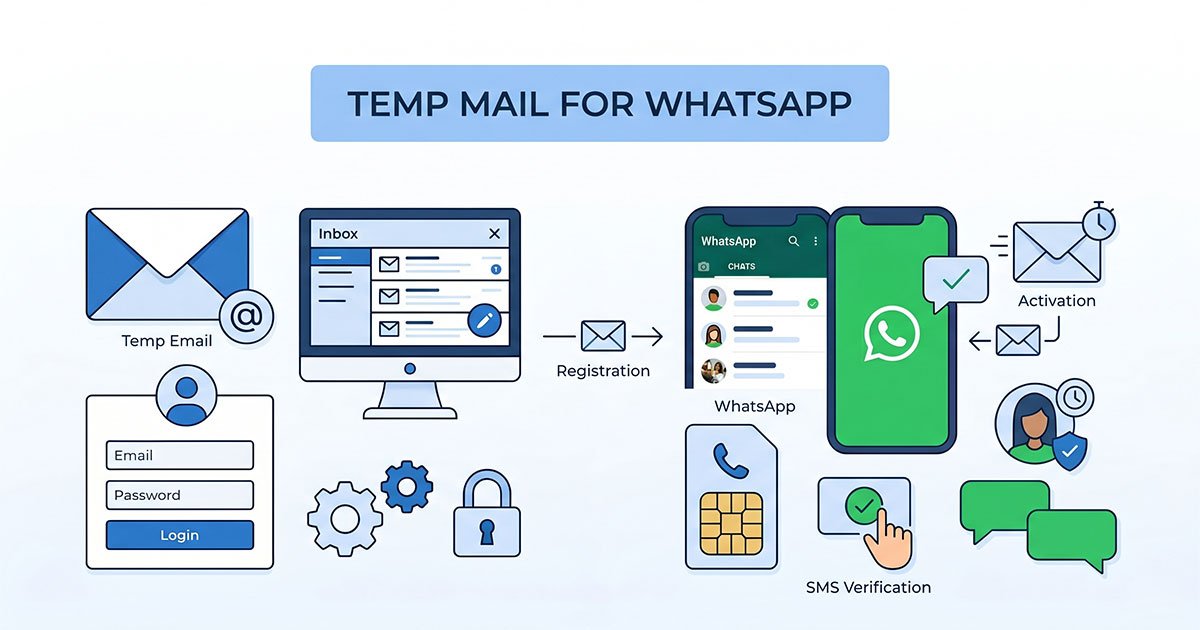
Temp Mail for WhatsApp
Unlike Discord or Reddit, WhatsApp does not rely on email as part of its core identity system.
Account verification is primarily tied to phone numbers and SIM-based authentication, which means temporary email has very limited influence on privacy or account control.
Support: ⚠️ Limited usefulness
Best for: Short-term testing, temporary business setup experiments
WhatsApp is not an email-based platform, so temp mail plays only a minor role.
Use temp mail if you want to:
- Test WhatsApp Business workflows
- Experiment with Meta integrations temporarily
- Avoid using your primary inbox for short-term setup
Limitations:
- WhatsApp identity is tied to phone numbers, not email
- Temp mail does not improve anonymity inside WhatsApp
- Recovery and Meta-related notifications may become inaccessible after inbox expiration
- Not suitable for long-term WhatsApp Business usage
👉 Verdict: Useful only for temporary testing — not for privacy or long-term account management.
Choosing the Best Temp Mail Tool for Social Media
Not all disposable email services are built for the same purpose. Some are designed for casual browsing, while others are optimized specifically for verification-heavy workflows like social media signups.
If your goal is to register accounts quickly while minimizing long-term exposure, choosing the best temp mail for social media means looking beyond simple inbox generation and focusing on reliability, speed, and privacy behavior.
Instead of relying on generic “Top 10” lists, it’s more useful to evaluate temp mail tools based on how well they support real-world signup scenarios—especially when receiving one-time passwords (OTPs) or confirmation links from platforms like TikTok, Discord, or Instagram.
Key Features to Look For in a Temp Mail Service
✔ Instant Inbox Generation (No Friction)
A strong temp mail tool should create an email address automatically when you open the page.
There should be:
- No registration forms
- No password setup
- No personal information required
This ensures the service acts as a quick access layer, not another account you must manage.
✔ No Signup Required
Using a temporary email to avoid identity linkage loses its purpose if the provider itself requires registration.The best solutions operate entirely session-based, allowing you to generate and use an inbox without creating a secondary profile.
✔ Fast OTP and Verification Delivery
Social media platforms often send time-sensitive verification codes.
A reliable temp mail service must:
- Receive emails instantly
- Refresh automatically without manual reload
- Support common sender domains used by major platforms
Delayed delivery can cause verification failures, making speed a critical usability factor.
✔ Auto‑Expiration Controls
Disposable email should behave as intended—temporary.
Look for services that automatically delete:
- Inbox contents after a defined period
- Unused addresses
- Session data tied to the mailbox
This reduces the chance of long-term identifier reuse.
✔ Privacy‑First Logging Policies
Because temp mail is often used for privacy-conscious workflows, transparency matters.
Choose tools that clearly state they do not retain:
- Personally identifiable data
- IP-linked usage histories beyond operational needs
- Long-term message archives
A privacy-focused policy aligns the tool’s design with the reason users seek temporary email in the first place.
Why the Right Tool Matters
Using temp mail for social media isn’t just about generating a random address—it’s about creating a controlled boundary between short-term access and persistent identity.
A well-designed service helps you complete verification smoothly while minimizing friction, exposure, and inbox management overhead.
When evaluating options, prioritize speed, simplicity, and data minimization over feature-heavy platforms that replicate traditional email systems.
Best Practices When Using Temp Mail on Social Platforms
To get the most value from temp mail for social media, it’s important to use it intentionally rather than as a blanket replacement for your primary email. Temporary email works best as a controlled access tool—one that helps you explore platforms, complete verifications, or manage short-term workflows without creating unnecessary long-term connections.
Following a few practical guidelines can help ensure both usability and privacy.
✔ Use Temp Mail for Testing or Short-Term Engagement
- Temp mail is ideal for situations where you are:
- Trying a new platform before deciding to commit
- Running short-term campaigns or experiments
- Accessing gated communities, downloads, or features
- Observing trends or researching competitors
If the goal is evaluation rather than long-term participation, a disposable inbox helps keep that activity separate from your personal environment.
✔ Never Attach Sensitive or Critical Services
Because temporary inboxes expire, they should not be used for accounts that require:
- Password recovery or long-term login access
- Financial transactions or subscriptions
- Personal communications or secure data storage
For any service you depend on, always switch to a permanent email to maintain control and recoverability.
✔ Separate Browser Sessions When Managing Accounts
When using multiple accounts—especially for research or testing—consider separating sessions through:
- Different browsers or profiles
- Private/incognito windows
- Workspace-based login environments
This helps prevent session overlap, reduces accidental cross-logins, and keeps workflows organized.
✔ Understand Each Platform’s Policies
Some social media platforms monitor disposable email usage as part of anti-spam or anti-abuse systems. Before relying on temp mail, it’s helpful to:
- Review platform signup or verification rules
- Use temp mail responsibly rather than for automation or misuse
- Treat it as an access tool, not a way to bypass service safeguards
Using temporary email within normal exploratory or testing scenarios aligns with its intended purpose and avoids unnecessary friction.
By applying these best practices, users can maintain flexibility while still respecting platform ecosystems—balancing convenience, privacy, and responsible usage.
FAQ — Temp Mail for Social Media
Below are answers to common questions users search when deciding whether to use temp mail for social media verification.
Can I use free temp mail for social media verification?
Yes. Most best temporary email services 2026 are designed specifically for quick, free verification workflows.
They allow you to receive confirmation emails or OTP codes without creating an account or sharing personal information, making them suitable for short-term signups or testing scenarios.
However, free temp mail is best used for non-essential accounts rather than services you plan to rely on long term.
Will TikTok or Instagram block temporary emails?
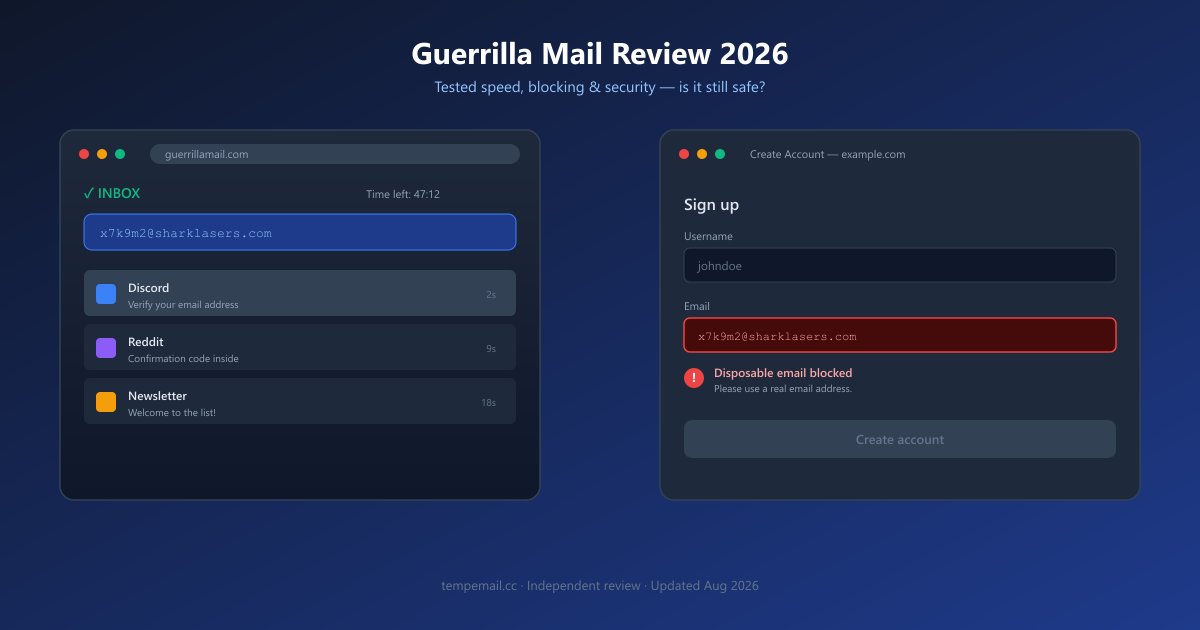
Some platforms actively monitor and restrict well-known disposable email domains as part of their anti-spam and abuse-prevention systems. This does not mean that all temporary email addresses are automatically blocked, but message delivery and verification success can vary. Factors such as the provider you choose, the platform’s specific verification policies, and the reputation or rotation frequency of the email domain all play a role. If a signup attempt fails, switching to another address or provider often resolves the issue quickly.
Is temp mail legal to use?
Yes, using a temporary email is legal in most jurisdictions because it functions simply as an email delivery tool rather than a method of deception. Issues arise only when it is used to violate a platform’s terms of service, enable automated abuse, or support fraudulent behavior. When applied for privacy protection, short-term testing, or limited engagement, temp mail operates like any standard communication method and is generally considered an acceptable way to manage online interactions responsibly.
Can I receive OTP codes with temp mail?
Yes. Receiving one-time passwords (OTPs) is one of the primary use cases of temporary email services. A reliable temp mail provider is designed to display incoming verification messages instantly, support common sender systems used by major platforms, and allow users to copy codes or open confirmation links in real time. This speed and accessibility make temporary email especially practical for account activation, short-term registrations, and testing workflows where quick verification is required without exposing a personal inbox.
Does temp mail protect against tracking?
Temporary email can help reduce identifier-based tracking by keeping your primary inbox separate from multiple online services. It limits long-term email profiling, lifecycle marketing campaigns linked to your real address, and cross-platform connections through a single email. While temp mail provides a layer of privacy for short-term registrations and account testing, it is not a complete solution. Users should still employ additional protections such as browser privacy settings, cookie management, and network-level security measures to safeguard their digital footprint comprehensively.
What happens after the email expires?
When a temporary inbox expires, all received messages are automatically deleted, and the address may be recycled or permanently removed by the provider. Once this happens, you can no longer access verification links, security notices, or recovery emails associated with that address. Because access cannot be restored, temporary email should only be used for accounts that do not require long-term availability, ongoing communication, or password recovery, making it suitable primarily for short-term registrations or testing scenarios.
The Smart Way to Join Social Media Without Inbox Clutter
If you’re using social platforms experimentally, temporarily, or for research workflows, temp mail offers a controlled way to complete verification without committing your personal inbox—while understanding its limits ensures you use it effectively.
If you want to explore new platforms without turning your personal inbox into a storage room for promotions, verification emails, and long‑term tracking, using a temporary email is the smarter approach. It lets you sign up, test features, or participate in communities without committing your primary identity to every service you try.
You stay free to experiment, your inbox stays clean, and you remain in control of how much of your digital footprint is actually permanent. Instead of managing unwanted messages later, you prevent them from reaching you in the first place.
If you're unsure where to start, platforms like TikTok or Discord typically offer the smoothest experience, while others may require additional verification steps.
Start using temp mail for social media today at tempemail.cc and keep your inbox clutter-free.