Die Verwendung von Wegwerf-E-Mails für Steam funktioniert 2026 in einigen Fällen immer noch – aber das größere Problem ist, was später passiert.
Eine Wegwerf-E-Mail empfängt möglicherweise die Steam-Bestätigungs-E-Mail während der Anmeldung, wird aber Monate später unzugänglich, wenn Steam Guard, die Passwortwiederherstellung oder die Anmeldebestätigung plötzlich wieder Zugriff auf dieselbe Adresse erfordern.
Dieses Wiederherstellungsproblem taucht regelmäßig in Steam-Community-Diskussionen und Reddit-Threads auf, in denen Nutzer berichten, dass sie den Zugriff auf Konten verloren haben, die mit abgelaufenen temporären Posteingängen verknüpft waren.
Dennoch nutzen viele Spieler weiterhin temporäre E-Mails für Steam bei Zweitkonten, Gewinnspielen, Handelsplattformen und kurzfristigen Registrierungen, um ihren primären Posteingang nicht preiszugeben.
Dieser Leitfaden erklärt, warum einige Anbieter von Wegwerf-E-Mails bei Steam noch funktionieren, während andere die Meldung „Bitte geben Sie eine gültige E-Mail-Adresse ein“ auslösen, welche Wiederherstellungsrisiken Nutzer oft übersehen und welche Setups für den langfristigen Kontozugriff sicherer sind.

Warum Temp-Mail für Steam funktioniert – und wo es scheitert
Die Verwendung von Wegwerf-E-Mails für Steam funktioniert 2026 in einigen Fällen immer noch – insbesondere bei der Kontoerstellung. Viele Dienste für temporäre E-Mails sind nach wie vor in der Lage, Steam-Bestätigungsnachrichten normal zu empfangen, was den Eindruck erweckt, dass sie vollständig mit dem Registrierungssystem von Steam kompatibel sind.
Dieser anfängliche Erfolg spiegelt jedoch nur einen Teil des Prozesses wider. Die wirkliche Einschränkung zeigt sich später im Lebenszyklus des Kontos, wenn Steam beginnt, sich für Identitätsüberprüfungen, Wiederherstellungen und Sicherheitsüberprüfungen auf den langfristigen E-Mail-Zugriff zu verlassen. Dies schafft einen dreistufigen Lebenszyklus der Steam-Kontoüberprüfung.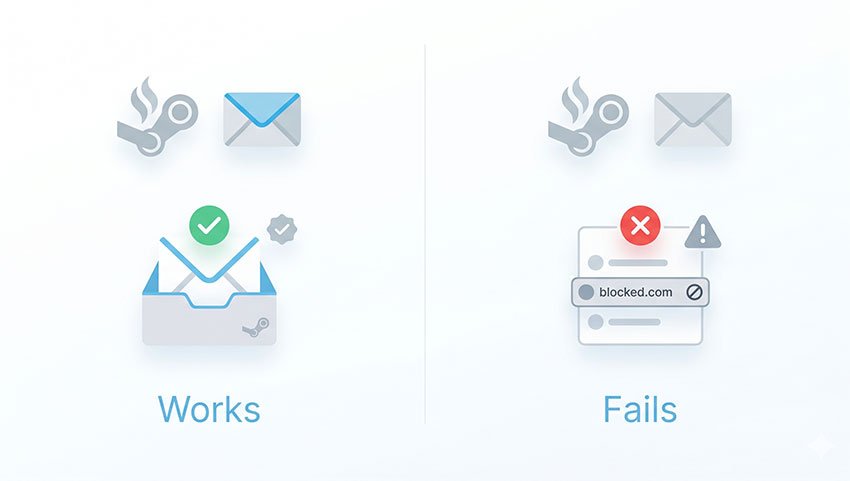
1. Temporäre E-Mails funktionieren oft bei der Anmeldung
Auf der Einstiegsebene akzeptiert Steam möglicherweise viele temporäre E-Mail-Adressen ohne Probleme.
In den meisten Fällen:
- können Steam-Konten erfolgreich mit einer Temp-Mail erstellt werden
- werden Bestätigungs-E-Mails während der Registrierung zugestellt
- können Nutzer die anfängliche Anmeldeeinrichtung ohne Unterbrechung abschließen
Deshalb gehen viele Nutzer davon aus, dass Temp-Mails vollständig unterstützt werden.
In diesem Stadium scheint alles stabil zu sein, da der Posteingang noch aktiv ist und Nachrichten empfangen kann.
2. Warum einige Temp-Mails von Steam abgelehnt werden
Obwohl sie in einigen Fällen funktionieren, werden viele temporäre E-Mail-Domains bei der Anmeldung blockiert oder gefiltert.
Dies führt normalerweise zu Fehlern wie:
„Bitte geben Sie eine gültige E-Mail-Adresse ein“
Der Grund liegt nicht im Format, sondern in der Bewertung der Vertrauenswürdigkeit auf Domain-Ebene.
Häufige Faktoren sind:
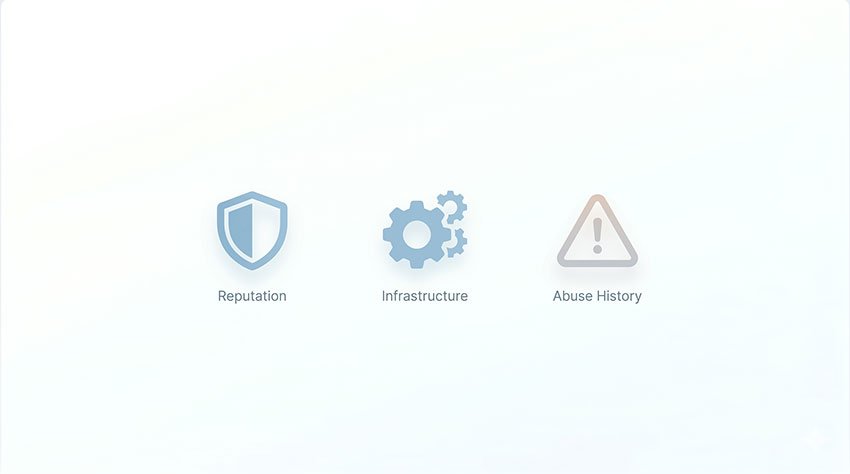
- Reputation der Domain und historische Missbrauchsaktivitäten
- starke Nutzung für Spam oder automatisierte Kontoerstellung
- instabile oder minderwertige E-Mail-Infrastruktur (MX- / SPF- / DKIM-Probleme)
- häufig rotierte oder neu registrierte Domains mit geringen Vertrauenssignalen
Aus diesem Grund funktionieren einige Temp-Mail-Dienste inkonsistent – eine Domain kann akzeptiert werden, während eine andere sofort scheitert.
3. Die wirkliche Einschränkung: Abhängigkeit vom Lebenszyklus des Steam-Kontos
Das wichtigste Problem ist nicht der Erfolg bei der Anmeldung, sondern wie Steam E-Mails in verschiedenen Phasen des Kontobesitzes verwendet.
Geringes Risiko – Anmeldebestätigung
Steam kann bei der Anmeldung von einem neuen Gerät oder Browser aus eine E-Mail-Bestätigung anfordern.
In diesem Stadium funktioniert die Temp-Mail normalerweise noch, da der Posteingang unmittelbar nach der Anmeldung aktiv ist.
Mittleres Risiko – Passwortzurücksetzung und Geräteänderungen
Wenn Nutzer Passwörter zurücksetzen oder Geräte wechseln, kann Steam eine E-Mail-Bestätigung verlangen, bevor der Zugriff gewährt wird.
Hier beginnen die Probleme, wenn der temporäre Posteingang abgelaufen ist oder nicht mehr zuverlässig zugänglich ist.
An diesem Punkt:
- ist das Konto zwar noch aktiv
- aber die Wiederherstellungswege beginnen zu schwächeln
Kritisches Risiko – Kontowiederherstellung und Eigentumsnachweis
Die höchste Abhängigkeit tritt bei vollständigen Kontowiederherstellungsszenarien auf, wie z. B.:
- verlorener Zugriff auf Steam Guard
- verdächtige Anmeldeaktivitäten
- vergessene Anmeldedaten, die ein Eingreifen des Supports erfordern
In diesen Fällen kann Steam einen Eigentumsnachweis verlangen, der Folgendes umfassen kann:
- Zugriff auf den ursprünglichen E-Mail-Posteingang
- Kaufhistorie oder Zahlungsbestätigung
- Validierung historischer Kontodaten
Wenn der Temp-Mail-Posteingang nicht mehr verfügbar ist, wird die Wiederherstellung erheblich schwieriger und kann vollständig von sekundären Verifizierungssignalen abhängen.
Hier wird die langfristige Einschränkung deutlich: Das Problem ist nicht die Kontoerstellung, sondern der Nachweis des Eigentums, wenn der Zugriff wiederhergestellt werden muss.
Warum das wichtig ist
Temp-Mails funktionieren zu Beginn des Lebenszyklus eines Kontos zuverlässig, weshalb viele Nutzer das Risiko unterschätzen.
Die Sicherheit von Steam ist jedoch nicht auf die Anmeldung ausgelegt, sondern auf die langfristige Identitätsüberprüfung.
Sobald das System von der Anmeldevalidierung zur Eigentumsüberprüfung übergeht, wird der kontinuierliche E-Mail-Zugriff zu einer Kernanforderung und nicht mehr zu einer bloßen Annehmlichkeit.
Warum einige Steam-Nutzer 2026 immer noch Temp-Mails verwenden
Obwohl temporäre E-Mail-Dienste klare langfristige Risiken für Steam-Konten mit sich bringen, werden sie 2026 für bestimmte Arten von risikoarmen oder nicht wesentlichen Aktivitäten immer noch häufig genutzt. In den meisten Fällen ist die Entscheidung nicht durch Anonymität motiviert, sondern durch Posteingangsverwaltung und Risikosegmentierung über verschiedene spielbezogene Dienste hinweg.
Für viele Nutzer beschränkt sich das Steam-Ökosystem nicht mehr nur auf die Plattform selbst. Es umfasst mittlerweile Handelsseiten, Community-Tools, Gewinnspielplattformen, Stat-Tracker und Gaming-Dienste von Drittanbietern. Im Laufe der Zeit entsteht so ein stetiger Strom von E-Mails, die nicht direkt mit dem Kernbesitz des Kontos verknüpft sind, aber dennoch zum Durcheinander im Posteingang beitragen.
Hier werden temporäre oder sekundäre E-Mail-Adressen als Trennungsschicht nützlich.
Häufige Anwendungsfälle für Temp-Mails bei Steam und wann Spieler sie nutzen
Viele Spieler verwenden temporäre E-Mails für:
- alternative Steam-Konten, die zum Testen oder für sekundäres Gameplay verwendet werden
- Registrierungen für Gewinnspiele und zeitlich begrenzte Werbeaktionen
- Handelsplattformen und Tools zur Inventarverfolgung
- experimentelle oder kurzfristige Community-Anmeldungen
- minderwertige oder einmalige Gaming-Dienste
In diesen Szenarien ist die E-Mail-Adresse nicht an den langfristigen Kontobesitz, Käufe oder kritische Wiederherstellungsressourcen gebunden.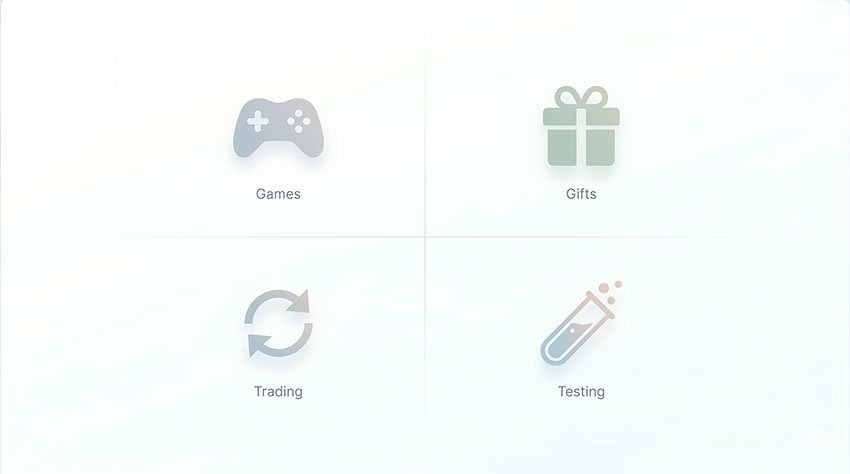
Reduzierung von Posteingangsrauschen und Spam
Einer der praktischsten Gründe für die Verwendung von Temp-Mails ist einfach die Reduzierung der Überlastung des Posteingangs.
Nach der Interaktion mit mehreren Steam-bezogenen Diensten erhalten Nutzer häufig:
- Werbe-E-Mails von Handelsplattformen Dritter
- automatisierte Benachrichtigungen von Gaming-Communities
- Marketingnachrichten von Gewinnspiel- oder Stat-Tracking-Seiten
- gelegentliche Phishing-Versuche, die als Steam-bezogene Warnungen getarnt sind
Obwohl sich nicht alle Plattformen so verhalten, kann der kombinierte Effekt dazu führen, dass ein primärer Posteingang mit der Zeit schwerer zu verwalten ist.
Temporäre E-Mails helfen dabei, diese Kommunikation mit niedriger Priorität von persönlichen oder finanziellen E-Mail-Konten zu isolieren.
Privatsphäre durch Trennung, nicht durch Anonymität
Es ist wichtig, zwischen Anonymität und struktureller Trennung zu unterscheiden.
Die meisten Steam-Nutzer versuchen nicht, ihre Identität zu verbergen oder Plattformsysteme zu umgehen. Stattdessen organisieren sie ihre digitalen Aktivitäten in verschiedene Risikostufen:
- Primäre E-Mail: Steam-Konten mit Käufen, Inventar und Wiederherstellungszugriff
- Sekundäre E-Mail: Handelstools, Plattformen Dritter, Community-Dienste
- Temporäre E-Mail: kurzfristige Registrierungen oder Einweg-Interaktionen
Diese Struktur reduziert die Abhängigkeit von einem einzigen Posteingang und begrenzt gleichzeitig die Gefährdung durch weniger vertrauenswürdige Dienste.
Der grundlegende Kompromiss, den Nutzer eingehen
Trotz der Bequemlichkeit verstehen die meisten erfahrenen Nutzer, dass temporäre E-Mails nicht für eine langfristige Kontoabhängigkeit geeignet sind.
Der Kompromiss ist unkompliziert:
- bessere Kontrolle des Posteingangs und weniger Spam-Belastung
- gegenüber schwächeren Wiederherstellungsgarantien und potenziellem zukünftigen Zugriffsverlust
Aus diesem Grund sind Temp-Mails in der Regel Konten oder Diensten vorbehalten, die als nicht kritisch oder ersetzbar gelten.
Wichtigste Erkenntnis
Hier geht es nicht um Anonymität, sondern um die Trennung des Posteingangs und die Risikosegmentierung. Temporäre E-Mails bleiben in Steam-bezogenen Ökosystemen beliebt, nicht weil sie sicherer sind, sondern weil sie Nutzern helfen, die Komplexität über mehrere Plattformen hinweg zu verwalten, bei denen nicht jedes Konto die gleiche Bedeutung hat.
Wenn Sie die gleichen Vorteile der Trennung wünschen, ohne den langfristigen Zugriff zu verlieren, kann eine stabilere „langfristige temporäre E-Mail“ eine bessere Option sein. Sie bewahrt die Vorteile der Privatsphäre und der Isolierung des Posteingangs von Temp-Mails, vermeidet jedoch die Wiederherstellungs- und Ablaufprobleme, die bei kurzlebigen Posteingängen normalerweise später auftreten.
Warum der E-Mail-Zugriff wichtiger ist als die Kontoerstellung
Auf den ersten Blick mag die Erstellung eines Steam-Kontos der wichtigste Schritt bei der Verwendung einer temporären E-Mail zu sein. In Wirklichkeit hängt die langfristige Stabilität eines Steam-Kontos weit mehr vom kontinuierlichen Zugriff auf die ursprüngliche E-Mail-Adresse ab als davon, ob der Anmeldevorgang selbst erfolgreich war.
Steam behandelt E-Mails nicht als einmaliges Verifizierungstool. Stattdessen fungiert sie als dauerhafte Identitätsschicht über den gesamten Lebenszyklus des Kontos hinweg – von der Anmeldesicherheit bis hin zur Wiederherstellung und Eigentumsvalidierung.

1. Steam Guard-Abhängigkeit (Sicherheitsebene auf niedriger Ebene)
Auf der grundlegendsten Ebene verwendet Steam E-Mails als Teil seines Anmeldeschutzsystems.
Dies beinhaltet:
- Anmeldebestätigung von neuen Geräten oder Browsern
- Bestätigung verdächtiger oder ungewöhnlicher Anmeldeaktivitäten
- Sicherheitswarnungen, die durch Standort- oder IP-Änderungen ausgelöst werden
In diesen Fällen ist die Steam Guard-E-Mail-Verifizierung oftals erster Kontrollpunkt verwendet wird, um zu bestätigen, ob Zugriffsversuche legitim sind.
Wenn der E-Mail-Posteingang nicht verfügbar ist, kann selbst eine routinemäßige Anmeldeüberprüfung zu einem Hindernis werden.
Dieses Design steht im Einklang mit weithin akzeptierten Kontosicherheitsstandards, die auf großen Plattformen wie Google, Microsoft und Apple verwendet werden, wo die E-Mail-basierte Verifizierung eine grundlegende Identitätsebene in Multi-Faktor-Authentifizierungssystemen bleibt. Diese Praktiken sind in allgemeinen Authentifizierungs- und Identitätsrichtlinien dokumentiert, wie z. B. den NIST Digital Identity Guidelines und Branchen-MFA-Frameworks.
2. Abhängigkeit bei der Passwortwiederherstellung (Zugriffskontrolle mittlerer Ebene)
Die nächste Abhängigkeitsebene tritt bei der Passwortwiederherstellung oder Kontomodifizierung auf.
Steam verwendet E-Mails in der Regel für:
- das Senden von Links zum Zurücksetzen des Passworts
- die Bestätigung des Kontobesitzes, bevor Anmeldedaten geändert werden dürfen
- die Validierung sicherheitsrelevanter Aktualisierungen, wie z. B. Änderungen der E-Mail-Adresse oder des Geräts
In diesem Stadium ist der E-Mail-Zugriff nicht mehr nur informativ – er wird zu einem Kontrollmechanismus für die Wiedererlangung der Kontokontrolle.
Wenn der ursprüngliche Posteingang nicht zugänglich ist, werden Wiederherstellungspfade langsamer und hängen zunehmend von alternativen Verifizierungssignalen ab.
Abhängigkeit von der Eigentumsverifizierung (Kontokontrolle hoher Ebene)
Die stärkste Abhängigkeit von der E-Mail zeigt sich bei der vollständigen Kontowiederherstellung oder bei Eigentumsstreitigkeiten.
Der Steam-Support kann von Benutzern verlangen, den Kontobesitz durch mehrere Signale nachzuweisen, darunter:
- Zugriff auf die ursprünglich registrierte E-Mail-Adresse
- Kaufhistorie und Transaktionsaufzeichnungen
- Details zur Zahlungsüberprüfung
- Historische Muster der Kontoaktivität
In Wiederherstellungsszenarien gibt Steam ausdrücklich an, dass die Überprüfung des Kontobesitzes auf „Eigentumsnachweis“-Signalen wie E-Mail-Zugriff, Zahlungshistorie und früheren Kontonutzungsdaten basiert, wie in der offiziellen Dokumentation des Steam-Supports dargelegt.
Wichtige Erkenntnis
Über alle drei Ebenen hinweg behandelt Steam E-Mails nicht als temporäres Anmeldetool.
Stattdessen verlässt es sich auf die E-Mail-Kontinuität als stabile Verbindung zwischen:
- Kontozugriff
- Sicherheitsüberprüfung
- und Eigentumsvalidierung
Deshalb ist das tatsächliche Risiko temporärer E-Mails zum Zeitpunkt der Erstellung nicht sichtbar, sondern tritt erst dann zutage, wenn ein langfristiger Zugriff oder eine Wiederherstellung erforderlich ist.
Wie Steam temporäre E-Mail-Domains bewertet
Steam dokumentiert die genauen Regeln, die es bei der Registrierung zur Annahme oder Ablehnung von E-Mail-Domains verwendet, nicht öffentlich. Basierend auf beobachtbarem Verhalten und konsistenten Benutzerberichten ist jedoch klar, dass Steam bei der Bewertung temporärer E-Mail-Adressen eine Kombination aus reputationsbasierter Filterung und technischer Validierung anwendet.
In der Praxis hängt es weniger davon ab, ob eine Temp-Mail-Domain funktioniert, weil die E-Mail „temporär“ ist, sondern vielmehr davon, wie vertrauenswürdig und stabil die Domain innerhalb breiterer E-Mail-Infrastruktursignale erscheint.
Diese Art der Bewertung steht im Einklang mit weit verbreiteten E-Mail-Authentifizierungs- und Anti-Missbrauchs-Standards der Branche, einschließlich Domain-Reputations-Scoring-Systemen, SPF/DKIM-Validierung und automatisierten Betrugspräventionsmodellen, die üblicherweise auf großen Plattformen wie Google, Microsoft und anderen wichtigen Online-Diensten angewendet werden.
1. Domain-Reputation und historische Missbrauchssignale
Einer der stärksten Einflussfaktoren ist die Domain-Reputation.
Temporäre E-Mail-Domains, die häufig für automatisierte Anmeldungen, Spam-Aktivitäten oder bot-generierte Konten verwendet werden, werden mit höherer Wahrscheinlichkeit markiert oder eingeschränkt.
Im Laufe der Zeit kann dies zu Folgendem führen:
- höhere Ablehnungsraten bei der Steam-Anmeldung
- inkonsistente Zustellung von Bestätigungs-E-Mails
- vollständige Sperrung bestimmter Wegwerf-Domains
Dies ist auch der Grund, warum einige ältere oder stark publizierte Temp-Mail-Dienste allmählich unzuverlässiger werden, selbst wenn sie zuvor funktioniert haben.
2. Qualität der E-Mail-Infrastruktur (MX, SPF, DKIM)
Der E-Mail-Validierungsprozess von Steam wird auch durch grundlegende E-Mail-Infrastruktursignale beeinflusst.
Domains mit schwacher oder unvollständiger Konfiguration können als weniger vertrauenswürdig eingestuft werden. Zu den wichtigsten technischen Elementen gehören:
- MX-Einträge (Zuverlässigkeit des E-Mail-Routings)
- SPF-Einträge (Schutz durch Absendervalidierung)
- DKIM-Authentifizierung (Überprüfung der E-Mail-Integrität)
Wenn einem temporären E-Mail-Dienst eine ordnungsgemäße Konfiguration fehlt oder er ein instabiles Routing-Verhalten aufweist, ist die Wahrscheinlichkeit höher, dass er bei der Steam-Registrierung fehlschlägt oder eine inkonsistente Zustellungsleistung aufweist.
3. Neue vs. etablierte Domains
Das Alter und die Stabilität der Domain spielen ebenfalls eine Rolle für die wahrgenommene Vertrauenswürdigkeit.
Im Allgemeinen gilt:
- neu erstellte oder häufig rotierte Domains haben tendenziell schwächere Vertrauenssignale
- ältere, stabile Domains mit konsistenter Nutzungshistorie funktionieren tendenziell zuverlässiger
Dies garantiert zwar keine Annahme oder Ablehnung, beeinflusst aber, wie streng automatisierte Filtersysteme die Domain bei der Anmeldung behandeln.
4. Verhaltensfilterung und adaptive Risikomodelle
Ein weiterer wichtiger Faktor ist, dass das Filterverhalten nicht statisch ist.
Plattformen wie Steam können ihre Bewertungsmuster im Laufe der Zeit anpassen, basierend auf:
- Missbrauchstrends bei bestimmten Domains
- Spitzen bei der automatisierten Kontoerstellung
- Änderungen bei Spam- oder Betrugsmustern
Das bedeutet, dass eine temporäre E-Mail-Domain, die heute funktioniert, später unzuverlässig werden kann – und umgekehrt –, je nachdem, wie sich ihre Nutzungsmuster entwickeln.
Wichtige Erkenntnis
Steams Bewertung temporärer E-Mails basiert nicht auf einer einfachen „Erlaubt vs. Blockiert“-Regel.
Stattdessen handelt es sich um eine dynamische Vertrauensbewertung, die Folgendes kombiniert:
- Domain-Reputation
- Qualität der technischen E-Mail-Infrastruktur
- historische Missbrauchsmuster
- und adaptives Filterverhalten
Deshalb funktionieren einige Temp-Mail-Anbieter konsistent, während andere unvorhersehbar scheitern, selbst wenn sie oberflächlich betrachtet ähnlich erscheinen.
Sicherere E-Mail-Strategien für Steam-Konten
Während temporäre E-Mails in bestimmten Situationen mit geringem Risiko nützlich sein können, hängt die langfristige Sicherheit eines Steam-Kontos davon ab, wie gut Ihre E-Mail-Strategie die Wiederherstellung, Verifizierung und den kontinuierlichen Zugriff unterstützt. Das Ziel ist nicht nur Bequemlichkeit oder Privatsphäre, sondern die Aufrechterhaltung einer stabilen Kontrolle über die Kontoidentität im Laufe der Zeit.
Im Vergleich zu permanenten E-Mail-Diensten wie Gmail oder Outlook fehlt es temporären E-Mail-Systemen an langfristiger Identitätsbeständigkeit.
Ein sichererer Ansatz besteht darin, E-Mails nicht als einen einzigen Posteingang zu betrachten, sondern als ein geschichtetes System, das auf der Wichtigkeit des Kontos und der Abhängigkeit von der Wiederherstellung basiert.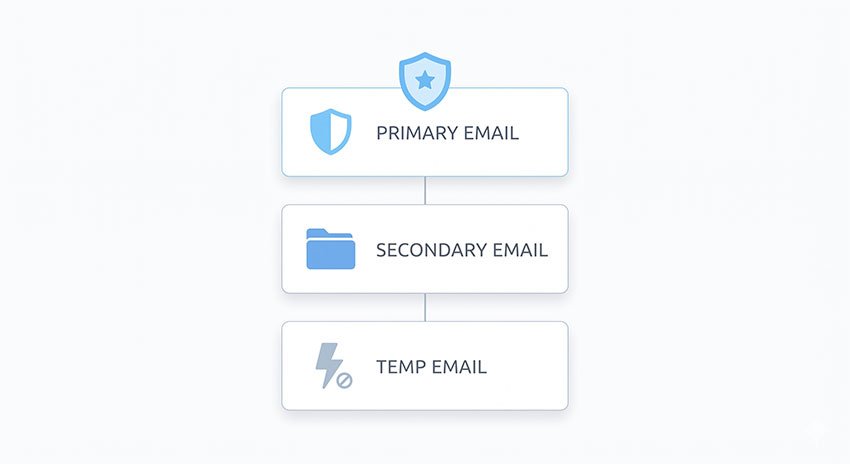
1. Strategie für primäre vs. sekundäre E-Mails
Eine gängige und zuverlässigere Struktur ist die Trennung von Steam-bezogenen Aktivitäten in verschiedene E-Mail-Ebenen.
- Primäre E-Mail: wird für das Haupt-Steam-Konto, Käufe, Inventar und langfristigen Zugriff verwendet
- Temporäre E-Mail: wird für Testkonten, Dienste von Drittanbietern, Gewinnspiele und nicht kritische Registrierungen verwendet
Diese Trennung stellt sicher, dass hochwertige Konten von Diensten isoliert bleiben, die Spam, Sicherheitsrauschen oder schwächere Schutzstandards erzeugen könnten.
2. Wann man Temp-Mail vs. permanente E-Mail verwendet
Die Entscheidung zwischen temporärer und permanenter E-Mail sollte auf dem Kontowert und der Bedeutung der Wiederherstellung basieren.
Temp-Mail ist besser geeignet für:
- kurzfristige Registrierungen
- Zweitkonten ohne langfristigen Wert
- Gewinnspiele oder Werbeanmeldungen
- experimentelle oder Wegwerf-Anwendungsfälle
Permanente E-Mail ist notwendig für:
- Konten mit gekauften Spielen oder Guthaben
- Handels- oder Inventar-bezogene Aktivitäten
- langfristige Steam-Nutzung
- jedes Konto, das in Zukunft eine Wiederherstellung erfordern könnte
Der entscheidende Unterschied ist, ob die Wiederherstellung des zukünftigen Zugriffs wichtig ist.
3. Posteingangssegmentierung zur Reduzierung des Risikos
Die Segmentierung des Posteingangs hilft, sowohl Spam als auch Sicherheitsrisiken zu reduzieren, indem verschiedene Arten von spielbezogenen Aktivitäten isoliert werden.
Ein strukturierter Aufbau umfasst oft:
- einen Posteingang für den Kernzugriff auf das Steam-Konto
- einen Posteingang für Gaming-Communities und Drittanbieter-Tools
- einen temporären oder sekundären Posteingang für Wegwerf-Registrierungen
Dies verringert die Wahrscheinlichkeit, dass weniger sichere Dienste kritische Kontowiederherstellungskanäle stören oder den primären Posteingang mit irrelevanten Benachrichtigungen überfluten.
4. Steam Guard-Backup-Codes und Vorbereitung auf die Wiederherstellung
E-Mail-Sicherheit allein reicht für den Kontoschutz nicht aus. Steam bietet zusätzliche Wiederherstellungsmechanismen, die frühzeitig aktiviert werden sollten.
Wichtige Schutzmaßnahmen sind:
- Steam Guard Mobile Authenticator
- Backup-/Wiederherstellungscodes, die sicher offline gespeichert werden
- gerätebasierter Authentifizierungsverlauf
Diese Tools verringern die Abhängigkeit vom E-Mail-Zugriff allein und bieten Fallback-Optionen, falls die E-Mail-Verfügbarkeit eingeschränkt ist.
5. Hinzufügen von Telefonverifizierung und Mobile Authenticator
Das Verknüpfen einer Telefonnummer oder das Aktivieren des Steam Mobile Authenticators fügt eine zusätzliche Sicherheitsebene über die E-Mail hinaus hinzu.
Dies verbessert die Zuverlässigkeit der Kontowiederherstellung in Situationen wie:
- Verlust des E-Mail-Zugriffs
- Gerätewechsel
- verdächtige Anmeldeaktivitäten
In der Praxis sind Konten mit Multi-Faktor-Authentifizierung deutlich widerstandsfähiger gegen Wiederherstellungsprobleme als reine E-Mail-Setups.
6. Späterer Wechsel von temporärer zu permanenter E-Mail
Einige Benutzer beginnen bei der frühen Kontoerstellung mit einer temporären oder sekundären E-Mail, migrieren aber später zu einer permanenten E-Mail, sobald das Konto an Wert gewinnt.
Dieser Übergang wird empfohlen, wenn:
- Spiele gekauft wurden
- Inventar- oder Handelsaktivitäten beginnen
- das Konto langfristig genutzt wird
Der frühzeitige Wechsel zu einer stabilen E-Mail im Lebenszyklus des Kontos reduziert zukünftige Abhängigkeitsrisiken und verbessert die Zuverlässigkeit der Wiederherstellung.
Wichtige Erkenntnis
Eine sichere Steam-E-Mail-Strategie besteht nicht darin, einen einzigen „besten“ Anbieter auszuwählen, sondern darin,ein geschichtetes System, bei dem die Wichtigkeit des Kontos die Anforderungen an die Zuverlässigkeit der E-Mail-Adresse bestimmt.
Je wertvoller das Konto wird, desto wichtiger ist es, sich von Wegwerf-E-Mails zu entfernen und auf eine stabile, wiederherstellbare und identitätsgebundene E-Mail-Infrastruktur zu setzen.
Häufige Fragen zu Steam Temp Mail
Dieser Abschnitt beantwortet die häufigsten Bedenken von Nutzern bezüglich der Verwendung von temporären E-Mails bei Steam. Der Fokus liegt auf dem tatsächlichen Verhalten, Einschränkungen und der Kontosicherheit in verschiedenen Szenarien.
Warum erhalte ich die Steam-Bestätigungs-E-Mail nicht?
In den meisten Fällen von Temp-Mail für Steam liegt dieses Problem beim E-Mail-Anbieter, nicht bei Steam selbst.
Einige Wegwerf-Posteingänge verzögern den Empfang von Nachrichten oder empfangen sie gar nicht, insbesondere während Zeiten mit hohem Verkehrsaufkommen wie Steam-Sales oder großen Spieleveröffentlichungen.
In den meisten Fällen hilft:
- das Aktualisieren des Posteingangs
- ein paar Minuten zu warten, um Verzögerungen auszugleichen
- der Wechsel zu einem anderen Anbieter, um Zustellungsprobleme zu beheben
Das Problem ist meist die Zuverlässigkeit der E-Mail und nicht, dass Steam die Registrierung blockiert.
Warum sagt Steam „Bitte geben Sie eine gültige E-Mail-Adresse ein“?
In den meisten Fällen, in denen Steam diesen Fehler anzeigt, wurde die E-Mail-Domain bereits abgelehnt, bevor eine Bestätigungs-E-Mail versendet wurde.
Dies wird häufig verursacht durch:
- Wegwerf-Domains mit geringer Reputation
- stark missbrauchte oder weit verbreitete Temp-Mail-Dienste
- Domains, die von automatisierten Filtersystemen markiert wurden
Die Verwendung eines weniger verbreiteten oder stabileren Anbieters löst das Problem meist sofort.
Erlaubt Steam temporäre E-Mail-Adressen?
In der Praxis verbietet oder genehmigt Steam temporäre E-Mail-Dienste nicht offiziell.
Ob eine Temp-Mail funktioniert, hängt hauptsächlich ab von:
- der Reputation der Domain
- der Zuverlässigkeit der E-Mail-Zustellung
- internem Filterverhalten
Einige temporäre E-Mails funktionieren normal, während andere bei der Registrierung abgelehnt werden.
Kann mein Steam-Konto wegen der Nutzung von Temp-Mail gesperrt werden?
In den meisten Fällen führt die alleinige Nutzung einer temporären E-Mail nicht zu einer Steam-Sperre.
Die Durchsetzung von Steam-Regeln basiert auf dem Nutzerverhalten, wie zum Beispiel:
- Betrug oder Täuschung
- Missbrauch des Marktplatzes
- Verstoß gegen Steam-Regeln
Die Art der E-Mail ist kein direkter Faktor für Sanktionen.
Kann ich Temp-Mail mit Steam Guard verwenden?
In den meisten Steam-Setups kann Temp-Mail anfangs mit Steam Guard funktionieren, bringt jedoch langfristige Risiken mit sich.
Steam Guard benötigt möglicherweise Zugriff auf die E-Mail für:
- Anmeldebestätigungen
- Passwortänderungen
- Sicherheitsbestätigungen
Wenn der Posteingang abläuft, wird die Kontowiederherstellung schwieriger. Eine dauerhafte E-Mail-Adresse oder ein mobiler Authentifikator sind für die langfristige Nutzung zuverlässiger.
Was soll ich tun, wenn mein Temp-Mail-Posteingang verschwindet?
In den meisten Wiederherstellungsszenarien, wenn der Posteingang nicht mehr zugänglich ist, verlässt sich Steam auf alternative Verifizierungsmethoden.
Dazu können gehören:
- Kaufhistorie
- Zahlungsbelege
- Nachweis der Kontoaktivität
Eine Wiederherstellung ist weiterhin möglich, aber ohne E-Mail-Zugriff in der Regel langsamer und komplexer.
Sind einige temporäre E-Mail-Domains zuverlässiger als andere?
Ja – in den meisten realen Fällen variiert die Zuverlässigkeit zwischen den Anbietern erheblich.
Stabilere Domains neigen dazu:
- E-Mails konsistent zu empfangen
- häufige Blockierungen zu vermeiden
- plattformübergreifend besser zu funktionieren
Die Zuverlässigkeit ist jedoch nicht dauerhaft und kann sich aufgrund von Missbrauchsmustern oder Filter-Updates im Laufe der Zeit ändern.
Kann ich Temp-Mail für Steam-Handels- oder Marktplatzkonten verwenden?
In den meisten Fällen ist die Verwendung von Temp-Mail für handelsbezogene Konten möglich, wird aber nicht empfohlen.
Zu den Risiken gehören:
- verpasste Handels- oder Sicherheitsbenachrichtigungen
- Verlust des Zugriffs zur Verifizierung
- Schwierigkeiten bei der Wiederherstellung der Kontoaktivität
Für Konten, die einen realen Wert beinhalten, wird ein stabiler E-Mail-Zugang dringend empfohlen.
Ist die Verwendung eines VPN mit Temp-Mail ein Problem?
In den meisten Situationen stehen VPN und Temp-Mail in keinem direkten Zusammenhang und verursachen keine Konflikte.
Wenn sie jedoch kombiniert werden mit:
- neuer IP-Adresse
- neuem Gerät
- temporärer E-Mail-Domain
kann dieses Muster auf einigen Plattformen zusätzliche Verifizierungsschritte auslösen.
Kann ich meine Steam-E-Mail später ändern?
Ja – in den meisten Fällen erlaubt Steam Nutzern, ihre E-Mail-Adresse nach der Kontoerstellung zu ändern.
Viele Nutzer registrieren sich anfangs mit einer temporären E-Mail und wechseln später zu einer dauerhaften Adresse, sobald das Konto an Bedeutung gewinnt.
Dieser Ansatz wird für die langfristige Kontostabilität empfohlen.
Fazit zur Sicherheit von Temp-Mail für Steam: Wann es funktioniert und wann es scheitert
Temp-Mail kann 2026 noch bei Steam verwendet werden, aber die Zuverlässigkeit hängt vollständig davon ab, wie lange das Konto existieren soll – nicht davon, ob die Anmeldung erfolgreich ist.
Auf der Oberfläche funktioniert temporäre E-Mail bei der Steam-Registrierung oft einwandfrei. Bestätigungs-E-Mails werden normalerweise zugestellt, und viele Nutzer schließen die Kontoerstellung ohne Probleme ab.
Dieser frühe Erfolg kann jedoch täuschen.
Die eigentliche Einschränkung zeigt sich später im Lebenszyklus des Kontos, wenn Steam von grundlegenden Anmeldeüberprüfungen zur Eigentumsverifizierung und zu Wiederherstellungsszenarien übergeht. In diesem Stadium ist der E-Mail-Zugriff nicht mehr optional – er wird Teil des Identitätssystems des Kontos selbst.
Wann Temp-Mail gut funktioniert
Temp-Mail ist im Allgemeinen akzeptabel, wenn:
- Alt-Konten oder sekundäre Profile erstellt werden
- Spiele, Plattformen oder Dienste getestet werden
- man sich für Gewinnspiele oder kurzfristige Events anmeldet
- Spam von Gaming-Tools Dritter vermieden werden soll
In diesen Fällen ist die Lebensdauer des Kontos kurz und die Abhängigkeit von der Wiederherstellung gering, sodass die E-Mail-Kontinuität nicht kritisch ist.
Wann Temp-Mail riskant wird
Temp-Mail wird problematisch, wenn das Konto Folgendes beinhaltet:
- gekaufte Spiele oder bezahlte Bibliotheken
- Steam-Guthaben oder Inventargegenstände
- Handelsaktivitäten oder CS2-Skins
- langfristigen Fortschritt oder Erfolge
- jegliche Erwartung einer zukünftigen Wiederherstellung
In diesen Situationen erhöht der Verlust des E-Mail-Zugriffs direkt das Risiko, die Kontrolle über das Konto zu verlieren.
Das Grundprinzip
Das Kernproblem ist nicht, ob Steam bei der Anmeldung Temp-Mail akzeptiert.
Es geht darum, ob Sie Monate oder Jahre später noch das Eigentum nachweisen können, wenn Steam eine Verifizierung verlangt.
Sobald die E-Mail-Kontinuität unterbrochen ist, hängt die Wiederherstellung von sekundären Signalen wie der Kaufhistorie oder der Validierung durch den Support ab – was langsamer und weniger vorhersehbar ist.
Für Nutzer, die weiterhin die Flexibilität einer temporären E-Mail wünschen, ohne den langfristigen Zugriff zu verlieren, kann eine „langlebige temporäre E-Mail“ als mittlere Ebene zwischen Wegwerf-Posteingängen und einer dauerhaften E-Mail-Adresse dienen. Dienste wie Tempemail.cc sind für diesen Anwendungsfall konzipiert und bieten eine verlängerte Aufbewahrungsdauer für Posteingänge, sodass Bestätigungs-E-Mails und zukünftige Wiederherstellungsnachrichten bei Bedarf weiterhin zugänglich sind.